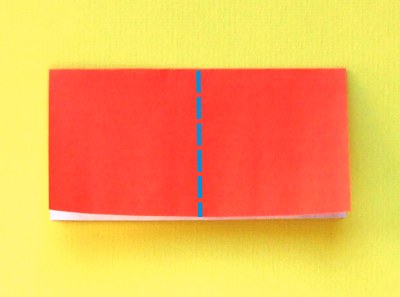
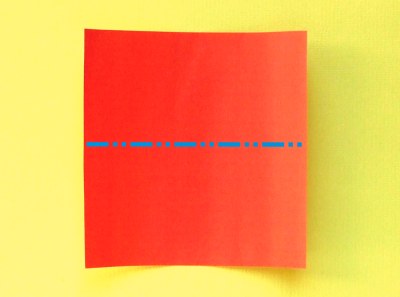
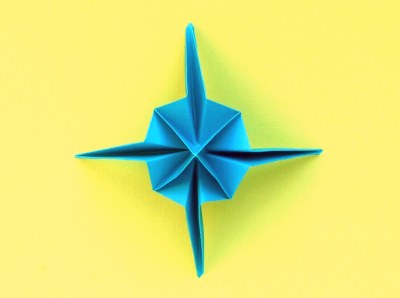
I used papers of about 3,5x3,5 inch or 9x9 centimeters to make each individual piece
for this model.
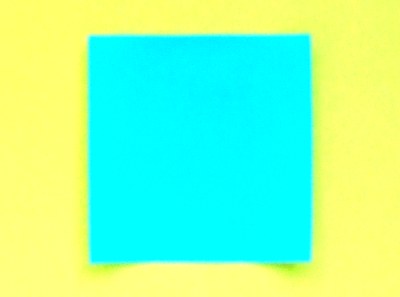 Step 1:
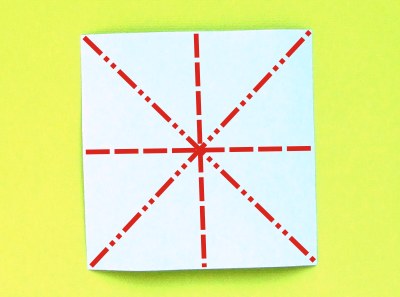
This is the front of the paper.
The backside is completely white.
Turn the paper.
Step 2:
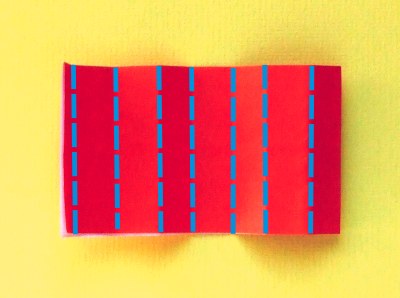
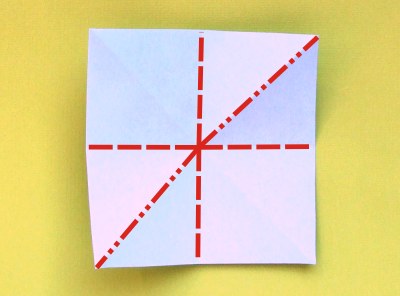
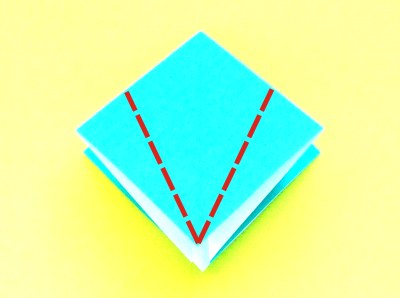
Prefold the paper over these 4 lines.
Step 3:
First, make a valley-fold over the 2 lines below, on the right.
Then, make a mountain-fold over the 2 lines in the middle.
And make a valley-fold over the 2 lines on the top left.
Now you get a basic shape.
Step 4:
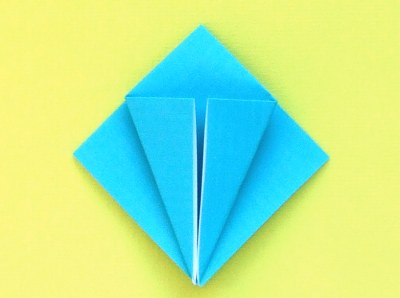
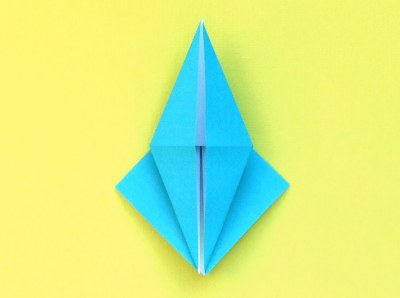
Make a valley-fold over these 2 lines.
Make these folds over the upper 2 layers of paper.
Step 5:
Unfold the folds you've made in step 4
Step 6:
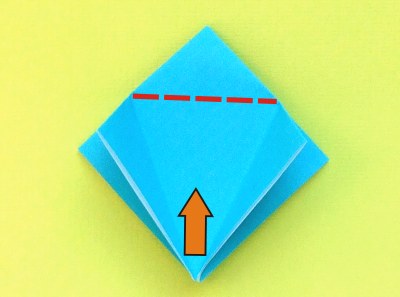
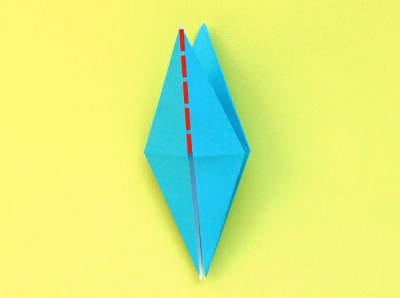
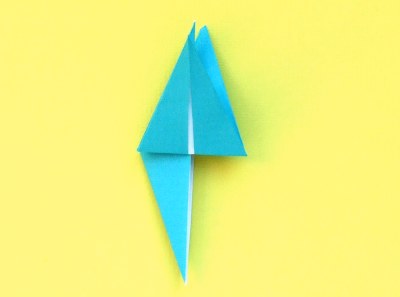
Pull the end at the bottom of the arrow upwards
by making a valley-fold over the red line.
Step 7:
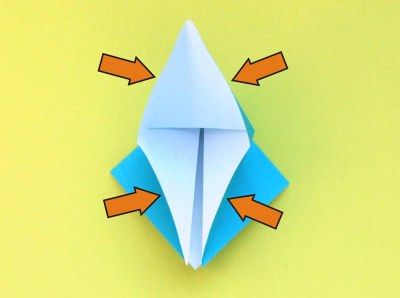
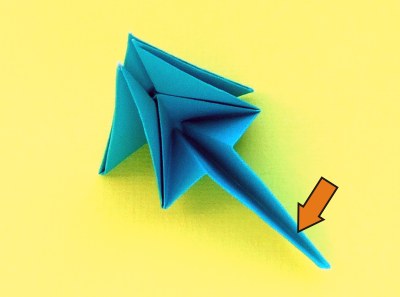
Press the edges indicated by the arrows flat from above.
You don't have to make new folding lines to do this,
everything is prefolded in step 4
Step 8:
Repeat step 4 to 7 on the backside of the model.
Step 9:
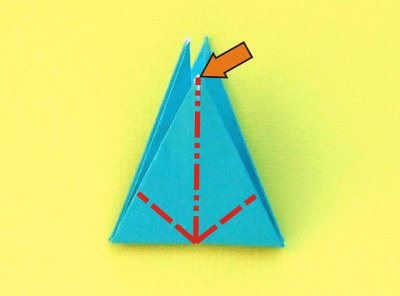
Fold the piece on the right of the red line to the left
by making a valley-fold over this red line (=bookfold).
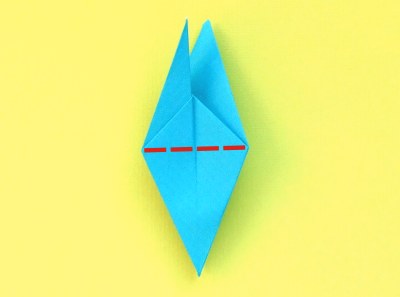
Step 10:
Fold the piece below the red line upwards by making
a valley-fold over this red line.
Step 11:
Repeat step 9 and 10 on the backside of the model.
Step 12:
Fold the end indicated by the arrow downwards by making
an inside reverse fold over these 3 lines.
Step 13:
The arrow shows the end which you've folded downwards
in step 12
Repeat step 12 on the other 3 same ends of the model.
Step 14:
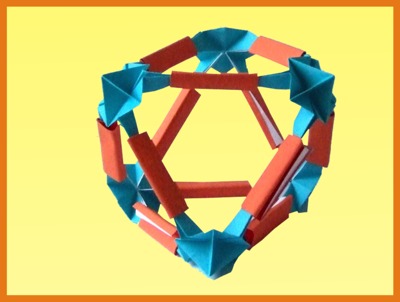
Make 6 of these pieces for one complete modular model.
Step 15:
This paper is coloured on one side too.
It has the same size as the blue papers.
Fold the paper in half by making a mountain-fold
over this line.
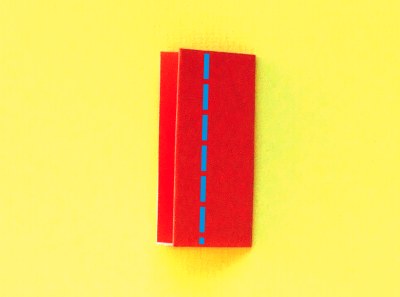
Step 16:
Make a valley-fold over this line.
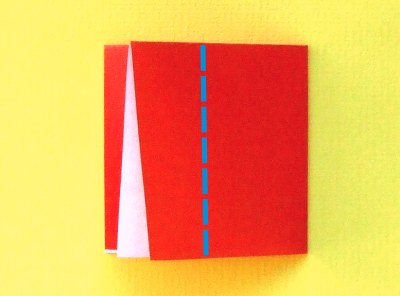
Step 17:
Make a valley-fold over this line
Step 18:
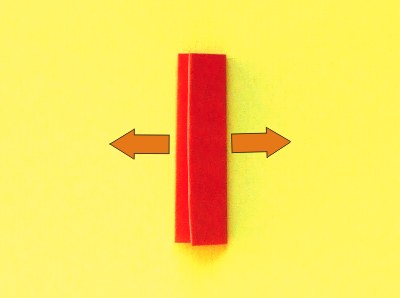
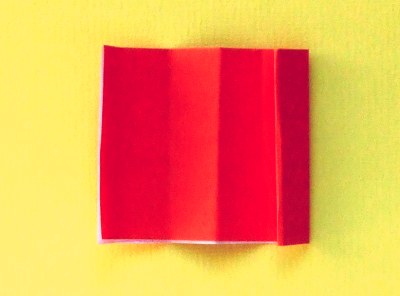
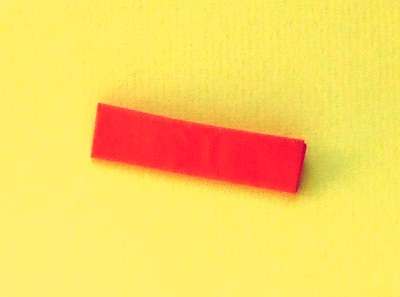
Fold the model in half one more time over this line.
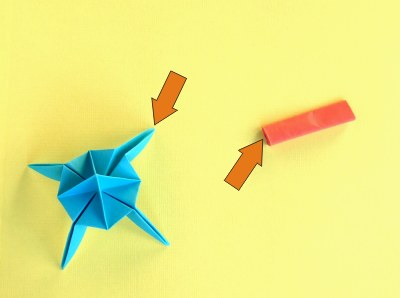
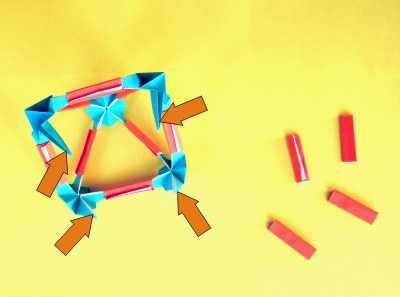
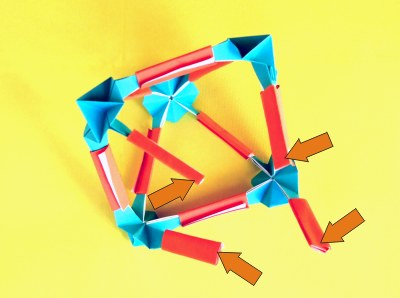
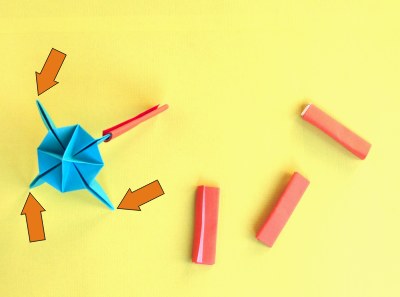 Connect an orange piece to the other 3
ends of the
Connect an orange piece to the other 3
ends of the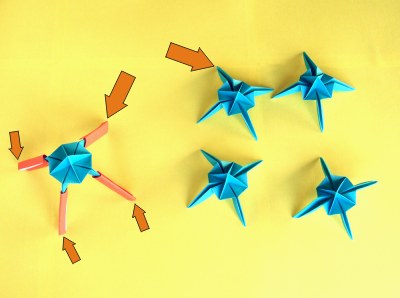 4 orange pieces indicated by the 4
arrows on the left.
4 orange pieces indicated by the 4
arrows on the left.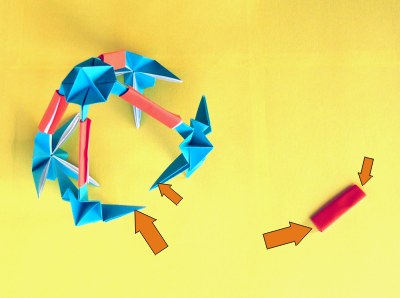 in the openings of the orange piece on
the right.
in the openings of the orange piece on
the right.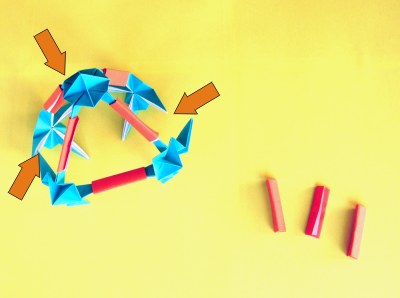 see arrows.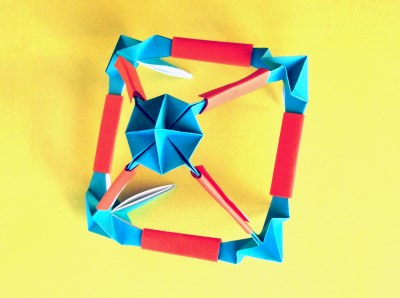
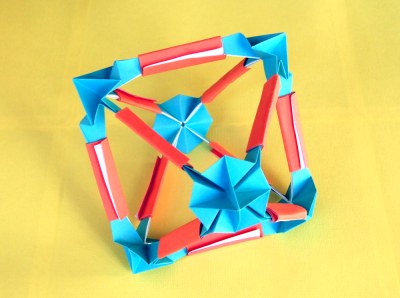 Looks a
little futuristic.
Looks a
little futuristic.